A name that needs no introduction in the world of literature is none other than Wole Soyinka. This man is one of Nigeria’s pioneers of literature and English writing. His name is synonymous with African literature and artistic expression. A playwright, novelist, poet, essayist, and activist, Soyinka’s impact transcends the boundaries of genre and continent. As the first sub-Saharan African to be awarded the Nobel Prize in Literature in 1986, he shattered barriers and paved the way for a generation of African voices to be heard on the world stage. This article from Naijassador will highlight the life and achievements of a legendary novelist and activist, Professor Wole Soyinka.
Early Life
Akinwande Oluwole Babatunde Soyinka was born on 13 July 1934 in Abeokuta, Ogun State Nigeria. Soyinka’s upbringing was embedded in the rich Yoruba culture and British colonial influences. Wole Soyinka was born as the second of his parents’ seven children. His siblings’ names are Atinuke “Tinu” Aina Soyinka, Femi Soyinka, Yeside Soyinka, Folashade Soyinka, Omofolabo “Folabo” Ajayi-Soyinka and Kayode Soyinka. His younger sister, Folashade Soyinka, never made it past her first birthday as she died on her birthday.
His parents, both educators, instilled in him a love for learning and a critical eye towards societal norms. His early exposure to traditional myths, folk tales, and Anglican Church rituals later found expression in his works, creating a unique blend of African and Western literary traditions.
Soyinka’s father, Samuel Ayodele Soyinka, often referred to by his son as “Essay,” was an Anglican minister and the headmaster of the St. Peters Primary School in Abẹokuta. Soyinka’s father was a cousin of the Odemo (King) of Isara-Remo Samuel Akinsanya, a founding father of Nigeria. This makes Soyinka a descendant of the rulers of Isara.
Wole Soyinka’s mother was Grace Eniola Soyinka (née Jenkins-Harrison). He fondly referred to his mother as the “Wild Christian.” She was a shop owner in the market and a political activist in the local community. Soyinka’s mother was a member of the Anglican Church and endeavored to raise her children in the religious faith. According to Naijassador, Soyinka and his siblings grew up in the church, attending all religious activities, including singing in the choir. However, in his later life, Soyinka declared himself an atheist. In his memoir, Aké: The Years of Childhood, published in 1981, Soyinka reflected on his childhood memories.
Wole Soyinka’s relationship with the Ransome-Kuti family is through the ties of his mother, Grace Eniola Soyinka. She was the granddaughter of Rev. Canon J. J. Ransome-Kuti and the child of the Rev Canon’s first daughter, Anne Lape Iyabode Ransome-Kuti. Soyinka’s first cousins include the famous musician Fela Kuti, the human rights activist Beko Ransome-Kuti, politician Olikoye Ransome-Kuti and activist Yemisi Ransome-Kuti. His other family members from the Ransome-Kuti family are musicians and sons of Fela Kuti, Femi Kuti, Seun Kuti, and dancer Yeni Kuti.
Education

Wole Soyinka attended St. Peter’s Primary School in Abeokuta in 1940 and the Abeokuta Grammar School for his formative years. He won several prizes and awards for his literary composition before attending one of the elite schools at that time, the Government College, Ibadan.
He obtained a degree from the University College, Ibadan in Oyo State, Nigeria 1952, affiliated with the University of London. He studied English literature, Greek, and Western history at the University. Also, at the University College, Ibadan, Soyinka and six other friends founded the Pirates Confraternity. This society tackled anti-corruption and sought justice for the student organization. It was the first confraternity established in Nigeria by students.
Soyinka relocated to England, where he furthered his studies. After attending prestigious schools in Nigeria and England, Soyinka studied literature at the University of Leeds. During this period, he proved pivotal as he immersed himself in Western theatre and honed his dramatic skills. Returning to Nigeria in the 1950s, he found a nation on the cusp of independence, a sentiment that ignited his own creative and political fervor.
Career
After completing his studies in Nigeria and the UK, Soyinka worked at the Royal Court Theatre in London. While there, he wrote several plays which were produced both in Nigeria and the UK for theatres and on radio. Soyinka’s literary career exploded in the 1960s with a prolific output of plays, novels, and poetry. His plays, often satirical and infused with Yoruba mythology, challenged political corruption, social injustice, and the legacy of colonialism. Works like “A Dance of the Forests,” “The Road,” and “Madmen and Specialists” gained international acclaim for their blend of political commentary, vibrant language, and theatrical innovation.
His novels, like “The Interpreters” and “Season of Anomy,” explored the complexities of post-colonial African society, delving into themes of identity, alienation, and political struggle. His poetry, often infused with lyrical beauty and biting wit, captured the contradictions and aspirations of a continent in flux.
From 1975 to 1999, Wole Soyinka worked as a Professor of Comparative literature at the Obafemi Awolowo University, formerly known as the University of Ife. Soyinka was later named professor emeritus at the University at the end of the military rule in 1999. Soyinka taught at Cornell University as Goldwin Smith professor for African Studies and Theatre Arts from 1988 to 1991in the United States.
He also taught at Emory University in 1996 and was appointed Robert W. Woodruff Professor of the Arts. Soyinka was a Professor of Creative Writing at the University of Nevada, Las Vegas, where he served as scholar-in-residence at New York University’s Institute of African American Affairs and Loyola Marymount University in Los Angeles, California. Other universities in which Soyinka has been named professor or taught include the universities of Cambridge, Oxford, Harvard, and Yale. In 2008, he became a Distinguished Scholar in Residence at Duke University.
Political Activism and Imprisonment
Soyinka’s artistic pursuits were always intertwined with his political convictions. He was a vocal critic of authoritarian regimes, his plays often serving as veiled attacks on corrupt politicians and social ills. This outspokenness, however, came at a price.
Soyinka was active in Nigeria’s political history and campaigning for independence from British colonial rule. In 1965, he seized the Western Nigeria Broadcasting Service studio and broadcast, demanding the cancellation of the Western Nigeria Regional Elections. In 1965, he was imprisoned for 22 months after staging a radio broadcast that challenged the legitimacy of a rigged election.
Again, in 1967, Soyinka was arrested by the General Yakubu Gowon-led administration during the Nigerian Civil War. Soyinka was put in solitary confinement, where he spent a solid two years, for volunteering to be a non-government mediating actor. His time in prison, ironically, became a source of creative inspiration. His prison memoir, “The Man Died,” is a chilling yet poignant account of his experiences, documenting the psychological and physical hardships endured but also the resilience of the human spirit. Wole Soyinka was not only a critic of the Nigerian government but also criticized other African governments like the Zimbabwe government during the reign of Mugabe.
During the regime of Nigeria’s General Sani Abacha from 1993 to 1998, Soyinka was in the government’s bad books. Abacha tried to arrest him and have him killed, but Soyinka escaped from Nigeria using a motorcycle and following the “NADECO Route.” Subsequently, Abacha declared a death sentence on Soyinka in absentia. After the death of Abacha and civilian rule restored to the country in 1999, Wole Soyinka returned to the country and was free of all charges.
The Nobel Prize
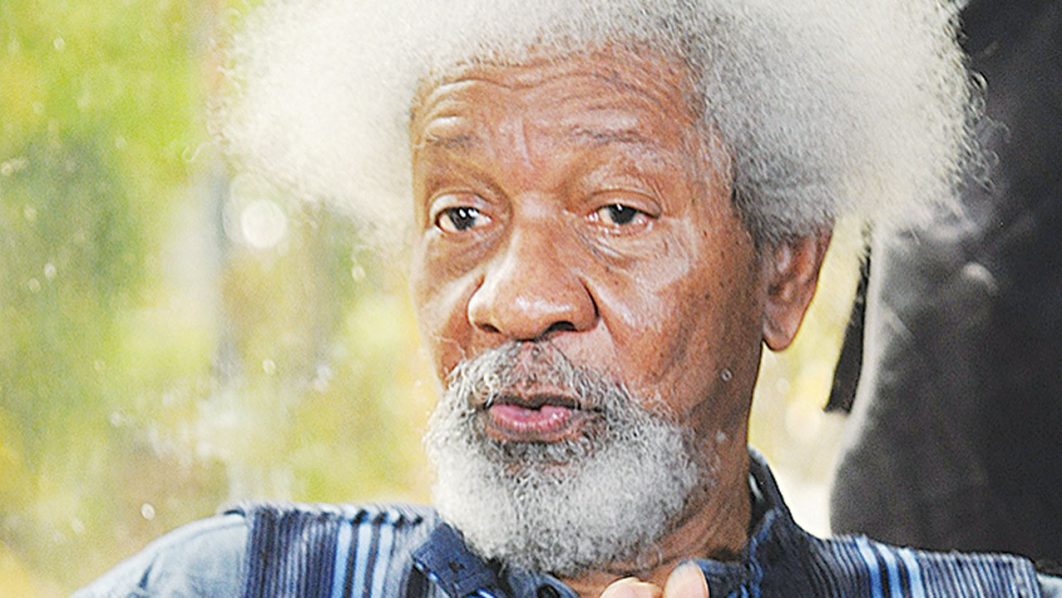
Soyinka’s 1986 Nobel Prize win was a watershed moment for African literature. It was a robust validation of the continent’s rich literary heritage and its potential to contribute to the global conversation in the decades since Soyinka has continued to be a prolific writer and an engaged public intellectual. He has used his platform to advocate for human rights, environmental protection, and cultural diversity.
Wole Soyinka’s legacy is immense. He is a literary giant and a symbol of intellectual and artistic freedom. His works have challenged perspectives, ignited conversations, and inspired generations of writers and artists worldwide. Through his unflinching critique of power, his commitment to social justice, and his celebration of African culture, Soyinka has earned his place as a true titan of the 20th and 21st centuries.
Summary of Wole Soyinka’s works
Below is the summary of the works of Wole Soyinka from the 1970s to beyond 2000
1970s-1980s
Soyinka delivered guest lectures at the Institute of African Studies in Ghana and premiered plays like “The Dance of The Forests” and “Death and The King’s Horseman.” His adaptation of Bertolt Brecht’s “The Three penny Opera,” titled “Opera Wọnyọsi,” and the play “The Biko Inquest” showcased his theatrical versatility. The 1981 autobiography “Aké: The Years of Childhood,” which provided insights into Soyinka’s early life, won the Anisfield-Wolf Book Award.
1980s-1990s
Soyinka founded the Guerrilla Unit, a theatrical group focusing on community issues, and continued to produce impactful works like “Requiem for a Futurologist” and “I Love My Country.” He accepted a position as Professor of African Studies and Theatre at Cornell University in 1988. Works such as “Mandela’s Earth, and Other Poems” and “Ìsarà: A Voyage around Essay” showcased his literary prowess.
1990s-2000s
Soyinka’s radio plays “A Scourge of Hyacinths” and “From Zia with Love” were politically charged parodies based on Nigerian events. He received an honorary doctorate from Harvard University in 1993 and continued his literary output with works like “Ibadan: The Penkelemes Years” and “The Beatification of Area Boy.” Soyinka’s opposition to political fraud in Nigeria and advocacy for freedom of expression garnered attention. He became a UNESCO Goodwill Ambassador in 1994.
2000s-2020s
Soyinka’s play “King Baabu” premiered in 2001, offering a satirical take on African dictatorship. His collection of poems, “Outsiders,” was released in 1999, and in 2006, he published the memoir “You Must Set Forth at Dawn.” Soyinka protested against the Thai military coup in 2006 and called for canceling the Nigerian presidential elections in 2007. In 2014, he received the International Humanist Award for his contributions to thought and expression.
Soyinka expressed concerns about religious extremism, particularly the abuse of freedom of worship leading to extremism in England. He opposed allowing Fulani herders to graze in southern Nigeria and advocated for their classification as terrorists to restrict their movements. In 2020, Soyinka described the year as one of the most challenging in Nigeria’s history, citing turbulence, negativity, and the impact of COVID-19. Wole Soyinka’s life and work reflect a commitment to artistic excellence, political activism, and the promotion of human rights and freedom of expression.
Personal life
Wole Soyinka has been married three separate times and divorced twice. From his previous marriages and current wife, he has eight children. His first marriage was to the late British writer Barbara Dixon, and the pair got married in 1958. Soyinka met Barbara Dixon at the University of Leeds in the 1950s, and they shared two children: a son named Olaokun and a daughter named Morenike. Soyinka’s second marriage was to a Nigerian librarian, Olaide Idowu, in 1963. She shares four children with his second ex-wife, and their names are Moremi, Iyetade, Peyibomi, and a second son, Ilemakin. Iyetade died in 2013. Soyinka married Folake Doherty for the third time in 1989, and the couple shares three sons: Tunlewa, Bojode, and Eniara. In 2014, during an interview, Wole Soyinka revealed his battle with prostate cancer.
Wole Soyinka’s story is one of unwavering commitment to art, truth, and justice. By engaging with his works, we gain a deeper understanding of African literature, the human condition, and his contribution to Naija as a country. His voice continues to resonate, reminding us of the power of language to challenge, inspire, and ultimately transform the world. Not only was he a good son of his country, Nigeria, but Wole Soyinka was a great activist who had no fear of the government and spoke the truth. His legacy has been embedded in history and will be remembered for many years.
Things you should know about Wole Soyinka, a Nigerian novelist.
Please tell us what else readers should know in the comment section.
Written by Sarah Aboje