Bola Ahmed Tinubu, popularly known as the Jagaban, is a prominent figure in Nigerian politics and a key player in the country’s democratic landscape.
As a former Governor of Lagos State and a significant force within the ruling All Progressives Congress (APC), Tinubu’s influence extends far beyond the borders of his home state. In this article, we delve into the career and personal life of this influential politician, shedding light on his journey and the indelible mark he has left on Nigerian politics.
Bola Ahmed Tinubu who is the current president of Nigeria, is a figure who sparks both admiration and controversy. His political career, spanning over three decades, has been marked by ambition, shrewd maneuvering, and a complex legacy. Understanding Tinubu requires exploring the various facets of his life and career, from his humble beginnings to his ascent to the highest office in the land.
Early Life
Bola Ahmed Tinubu was born on March 29, 1952, in Lagos State and he hails from the merchant family of Abibatu Mogaji, the Ìyál’ọ́jà of Lagos. His mother was a trader and his father was a renowned disciplinarian and businessman. Tinubu’s origins have remained shrouded in some mystery. While his official biography states he’s of Yoruba descent, some controversy surrounds his exact age and ancestral lineage.
Education
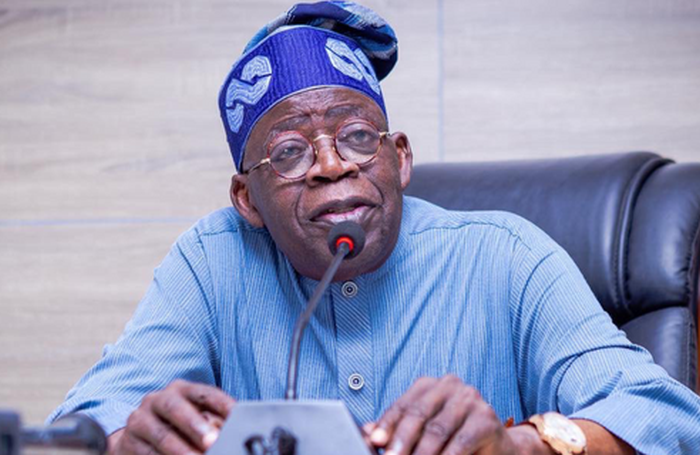
Bola Tinubu received a good education and his early education took place in Lagos, where he attended St. John’s Primary School, Aroloya. He also attended Children’s Home School in Ibadan. He later proceeded to the United States, where he first studied at Richard J. Daley College in Chicago before he obtained a Bachelor’s degree in Accounting from Chicago State University in 1979. Tinubu also holds a Master’s degree in Business Administration (MBA) from the same institution in 1983. He worked in the US for many years and this exposure to the American corporate world instilled in him a strong work ethic and business acumen.
Career and Entry into Politics
After completing his education in the United States, Bola Tinubu embarked on a successful career in the financial sector, working for reputable companies such as Arthur Andersen, Deloitte, Haskins, & Sells, and Exxon Mobil. His background in accounting and finance provided him with a solid foundation for his subsequent foray into politics. After returning to Nigeria in 1983, Tinubu joined Mobil Oil Nigeria, where he worked for a long time before becoming one of the company’s executives.
Tinubu entered the world of politics in 1990. He joined the Social Democratic Party, a pro-democracy movement during the military regime, and soon established himself as a charismatic and politically astute figure. Tinubu’s political journey began in the early 1990s when he joined the pro-democracy movement, advocating for the restoration of democracy in Nigeria during the military era. In 1992, he was elected as a Senator representing the Lagos West constituency, marking the beginning of his illustrious political career. His rise was rapid, culminating in his election as senator for Lagos West in 1992 in the Nigerian Third Republic. However, this was short-lived due to the overtake of power by the military regime.
The annulment of the June 12, 1993 presidential election saw Tinubu become a founding member of the pro-democracy National Democratic Coalition. This group was created and mobilized to show support for the restoration of democracy and recognition of Moshood Abiola as the winner of the June 12, 1993 election.
When the military seized power and the military head of state General Sani Abacha, came into power, Bola Tinubu went into exile in 1994. He, however, returned to the country in 1998 after the death of the military dictator, Sani Abacha, and the restoration of civilian rule which brought about the Fourth Nigerian Republic.
Bola Tinubu became a protégé of the Alliance for Democracy (AD) leaders like Abraham Adesanya and Ayo Adebanjo in the 1999 elections. He subsequently won the AD primaries for the Lagos State governorship elections coming top of his close opponents like Funsho Williams and Wahab Dosunmu. In January 1999, Bola Ahmed Tinubu stood for the position of Governor of Lagos State under the AD governorship ticket and was subsequently elected governor of Lagos State in 1999.
Governor of Lagos (1999-2007)
In 1999, Bola Tinubu was elected as the Governor of Lagos State under the platform of the Alliance for Democracy (AD), marking the commencement of his two-term tenure that would see significant infrastructural development and policy reforms in the state. His administration focused on urban renewal, education, healthcare, and youth empowerment, laying the groundwork for the economic prosperity and growth that Lagos State enjoys today.
Tinubu’s true political clout solidified when he was elected governor of Lagos State in 1999. During his two terms in office, he implemented extensive reforms, transforming Lagos from a chaotic, decaying city into a bustling economic hub. He improved infrastructure, cracked down on crime, and attracted foreign investment, fostering development at a remarkable pace.
While widely praised for his achievements in Lagos, Tinubu’s legacy remains contested. Critics point to allegations of corruption and cronyism during his tenure, accusing him of enriching himself and his allies through government contracts. Additionally, his authoritarian tendencies and disregard for political opposition raise concerns about democratic erosion.
Role in National Politics
Bola Tinubu’s influence in Nigerian politics extends beyond Lagos State, with his strategic alliances and political maneuverings playing a crucial role in the formation and sustenance of the All Progressives Congress (APC), Nigeria’s ruling party. As the National Leader of the APC, Tinubu has been instrumental in shaping the party’s agenda and direction, leveraging his political acumen and vast network to foster unity and cohesion within the party.
2023 Presidential Election
On 10 January 2022, Bola Ahmed Tinubu made his formal announcement that he would be running for the highest political position in the country which is that of president. However, this came as no surprise since many people have had an idea that the former governor of Lagos State was interested in the position. On 8 June 2022, Tinubu won the presidential ticket of his party APC at their convention scoring a total vote of 1,271. He defeated his close rival and then vice president of Nigeria, Vice President Yemi Osinbajo and Rotimi Amaechi both of whom scored 235 and 316 respectively.
The presidential election of February 2023 saw Tinubu being declared as the winner of the 2023 presidential election by the Independent National Electoral Commission (INEC). He scored a total vote of 8,794,726 defeating his close opponents, Atiku Abubakar of the People’s Democratic Party (PDP) who polled a total vote of 6,984,520, and Peter Obi of the Labour Party who had 6,101,533 votes.
Despite the controversies, Tinubu’s political machine continued to churn, culminating in his victory in the 2023 presidential election. His campaign capitalized on his record in Lagos, portraying him as a strong leader capable of replicating his economic success at the national level. The election, however, was not without controversy, with accusations of voter manipulation and intimidation casting a shadow over his victory.
As president, Tinubu faces a multitude of challenges. Nigeria grapples with poverty, insecurity, corruption, and a fractured social fabric. Whether he can address these issues effectively and deliver on his promises of economic prosperity and national unity remains to be seen. His success will hinge on his ability to navigate political complexities, foster inclusivity, and address the concerns of a diverse and often skeptical populace.
Personal Life

Beyond his political career, Bola Tinubu is a devoted family man, with a wife, Oluremi Tinubu, who is a Senator representing the Lagos Central Senatorial District. Tinubu and Oluremi got married in 1987. Tinubu has a total of six children, he has three children with his wife Oluremi Tinubu and they include Zainab Abisola Tinubu, Habibat Tinubu, and Olayinka Tinubu. Tinubu’s older children from his previous relationships are Kazeem Olajide Tinubu, Folashade Tinubu, and Oluwaseyi Tinubu. Tinubu lost his mother, Abibatu Mogaji, on June 15, 2013, at the age of 96. He also lost his first son Kazeem Olajide Tinubu on 31 October 2017, he died in London.
The president also has children who have followed in his footsteps in various capacities. He is known for his philanthropic endeavors, with a foundation, the Bola Ahmed Tinubu Foundation, dedicated to empowering youths and promoting social welfare initiatives across Nigeria. Tinubu has been conferred two traditional chieftaincies; he is the Asiwaju of Lagos and the Jagaba of the Borgu Emirate in Niger State.
Bola Tinubu’s contributions to Nigerian politics are manifold, with his visionary leadership and commitment to democratic ideals leaving an indelible mark on the country’s political landscape. His ability to navigate the complexities of Nigerian politics and forge strategic alliances has solidified his position as one of the most influential politicians in Nigeria’s Fourth Republic.
Controversies
In 1993, Tinubu had his assets frozen by the United States government as a result of a court case. This was done with the belief that the American government had asserted that the American bank accounts of Tinubu held the proceeds of heroin dealing. He later settled with the U.S. government and had to forfeit up to $460,000 for the settlement in 1993. There were courts documents later revealed according to Naijassador which reported on the case and suggested that Tinubu had worked in league with two Chicago heroin dealers.
The Federal Government of Nigeria rejected a request by Britain to release evidence needed for further investigation and prosecution of the three Nigerian ex-governors in a London court. In April 2007, after the general elections, the Federal Government brought Tinubu before the Code of Conduct Bureau for trial over the alleged illegal operation of 16 separate foreign accounts. Nothing was ever heard again concerning these allegations.
Likewise, in January 2009, the Economic and Financial Crimes Commission cleared Tinubu and Governors James Ibori of Delta State and Obong Victor Attah of Akwa Ibom State of some charges. These charges included charges of conspiracy, money laundering, abuse of office, and official corruption about a sale of Vmobile network shares in 2004.
According to Naijassador, there were reports that the British Metropolitan Police were investigating a transaction between the Lagos State government and Econet (Airtel) in September 2009. It alleged that there was an investment that was not legal between both parties. However, Tinubu revealed that the said transaction was legal and straightforward. He also said that the investment was made to profit the state and there were no intermediaries involved. He made this statement to clear the rumors that the proceeds from the investment were for his pockets.
During the 2019 elections in Nigeria, a bullion van was seen entering Tinubu’s residence on Bourdillion Road in Ikoyi Lagos. This caused much uproar in the country with many doubting Tinubu’s source of income. He later on explained that he owed no one explanation and that he could keep his money anywhere he wanted. This further doused every speculation and rumor. Tinubu earned the famous title Jagaban due to this incident. He is still referred to this till today. This title is different from his chieftaincy title of Jagaba of the Borgu Emirate in Niger State.
Bola Tinubu is a complex and multifaceted figure who continues to divide opinion. His ambition, political acumen, and undeniable achievements cannot be ignored. However, the concerns surrounding his methods and past raise legitimate questions about his commitment to transparency and democratic principles. As he sets course for his presidency, Nigeria and the world watch with bated breath, eager to see whether he can lead the nation towards a brighter future or succumb to the shadows of his past.
Bola Ahmed Tinubu’s journey from a humble background to a political titan is a testament to his resilience, determination, and unwavering commitment to public service. As he continues to play a pivotal role in shaping Nigeria’s political future, his legacy as a transformative leader and a champion of democracy will undoubtedly endure, inspiring future generations to strive for excellence and contribute positively to the development of Nigeria and the African continent at large.
Things you should know about Bola Ahmed Tinubu, a Nigerian political leader
Please tell us what else readers should know in the comment section
Written by Sarah Aboje