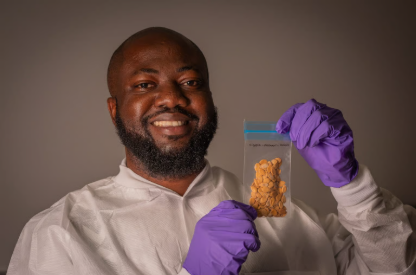
Temidayo Oniosun Puts Nigeria on the Global Map as Egusi Seed Enters Space Research Mission
Nigeria recorded another quiet but remarkable global milestone in 2025 as egusi melon seeds, a staple of West African cuisine, were successfully sent into space as part of an international scientific research mission linked to NASA’s Crew-11 programme.
The project was led by Dr Temidayo Oniosun, a Nigerian space scientist and entrepreneur, who coordinated the inclusion of the egusi seeds aboard a SpaceX Falcon 9 rocket bound for the International Space Station (ISS). The seeds were launched from the United States as part of an agricultural research experiment aimed at studying how traditional African crops adapt to microgravity and extreme space conditions.
According to reports, the mission seeks to explore the potential of resilient indigenous crops in future space farming systems, a growing area of interest as space agencies and private companies prepare for long-term human habitation beyond Earth. Scientists involved in the study explained that understanding how crops like egusi behave in space could contribute to sustainable food production for astronauts on extended missions.
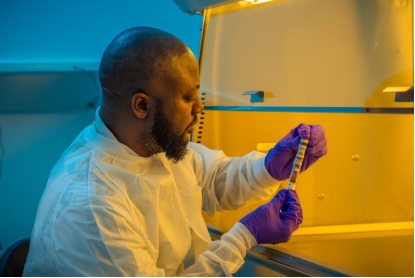
Dr Oniosun, who is also the Managing Director of Space in Africa, described the initiative as both a scientific and cultural milestone. He noted that the project was not only about food science but also about ensuring that Africa’s crops and knowledge systems are represented in global space research.
“This is about putting Africa into the global space conversation, not just as spectators, but as contributors,” he said, adding that indigenous crops like egusi have survived harsh conditions on Earth for centuries and could offer valuable insights for space agriculture.
The egusi seeds were sourced from Oyo State, Nigeria, and carefully prepared to meet the strict requirements for space-bound biological materials. Once aboard the ISS, the seeds will be observed for germination behaviour, genetic stability, and adaptability in microgravity, with findings expected to support future research on climate-resilient crops.
International media and scientific observers have described the mission as historic, noting that it represents one of the first times a culturally significant African food crop has been included in a space agriculture experiment. The project also highlights the increasing role of African scientists in global research collaborations involving NASA and other leading space institutions.
For Nigeria, the mission stands as another example of how its professionals are contributing meaningfully to global innovation beyond conventional sectors. From law and finance to artificial intelligence and now space science, Nigerian excellence continues to surface in spaces once considered out of reach.
As humanity looks toward deeper space exploration, the journey of a Nigerian egusi seed beyond Earth’s atmosphere serves as a reminder that Africa’s stories, resources, and intellect belong in the future being built above the planet.