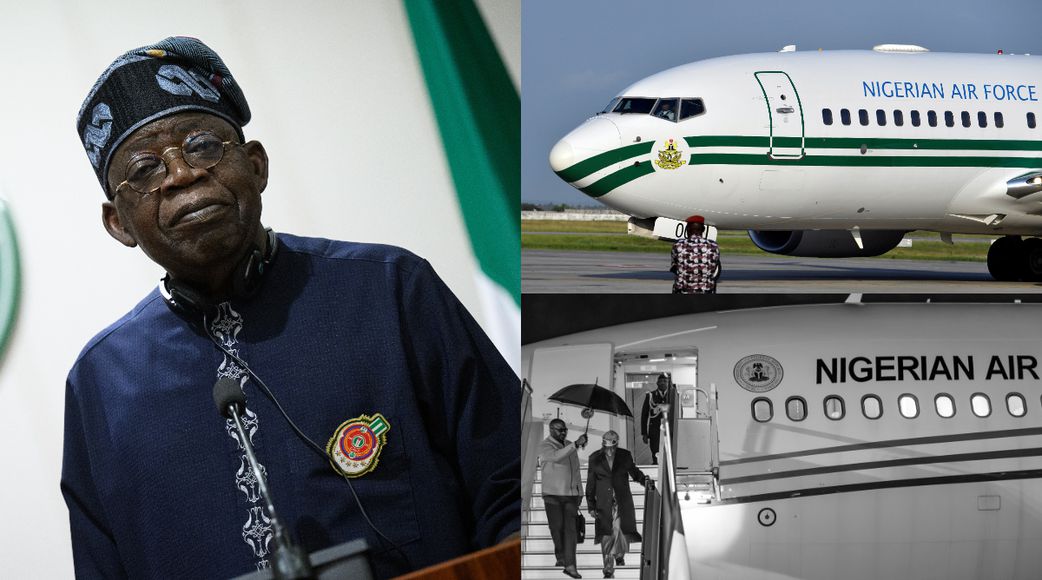
The Federal Government under President Bola Tinubu has spent an eye-watering ₦26.38 billion on the Presidential Air Fleet (PAF) between July 2023 and December 2024, according to verified spending records from civic tech platform Govspend.
The hefty expenditure, coming at a time of widespread calls for austerity, has triggered renewed scrutiny over the size and cost of maintaining Nigeria’s executive aircraft fleet.
According to Govspend’s data, the disbursements were made in multiple tranches, with large-scale outflows recorded particularly between April and August 2024. The single highest transaction, ₦5.08bn was made on April 23, 2024.
In one of the most intense spending months, August 2024, the fleet consumed over ₦5.6bn, including ₦2.21bn and ₦1.25bn released on the 5th and ₦902.9m and ₦1.24bn paid on the 6th.
The fleet, managed by the Nigerian Air Force, provides air transport for the President, Vice President, and top government officials.
However, its rising cost has ignited concerns given Nigeria’s fiscal pressures, rising debt service costs, and calls for economic prudence.
‘Structural Waste’: Experts Call for Downsizing
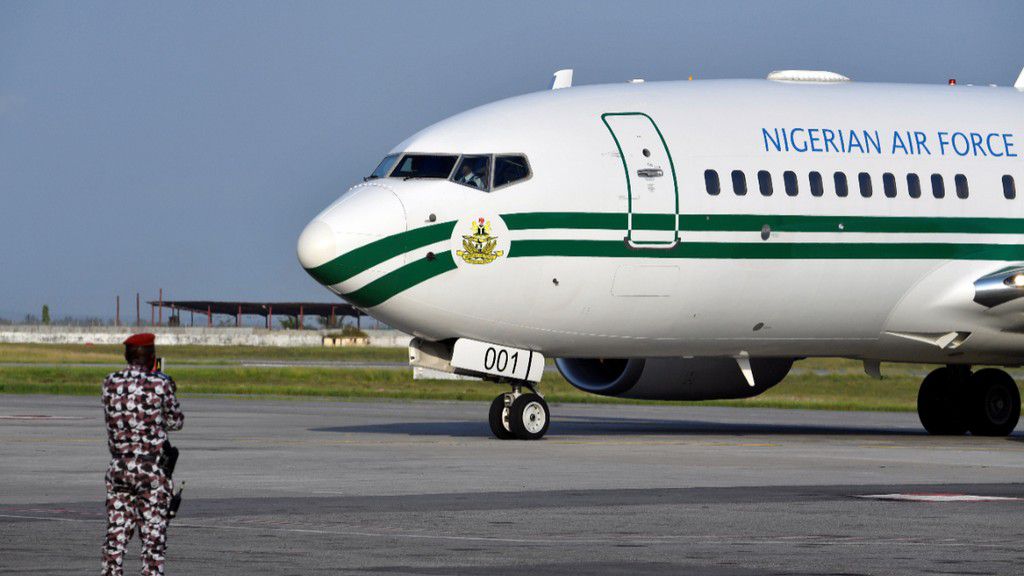
Aviation professionals and retired officials have expressed serious concern over the ballooning cost and size of the presidential fleet, blaming factors ranging from exchange rate volatility to excessive aircraft diversity.
Frank Oruye, a former Deputy Director of Engineering at the defunct Nigerian Airways, described the situation as unsustainable unless structural reforms are implemented.
“The fleet includes aircraft from various manufacturers—French, Canadian, American, and even the new Airbus A350. Each of these requires different equipment, spare parts, and specialised personnel. You’re essentially duplicating costs across board,” he explained to Punch in an interview.
Oruye, who once supervised the procurement of aircraft for former President Olusegun Obasanjo, noted that geopolitical risks also shape the decision to diversify the fleet.
“If your entire fleet is from one country and diplomatic relations deteriorate, your operations could be paralysed. But that also makes the cost of operations much higher,” he said.
He added that even with local maintenance efforts, the lack of indigenous manufacturing means most aviation equipment must still be imported.
“We are a consumer nation. Even if you try to build capacity locally, the costs remain dollar-denominated,” he warned.