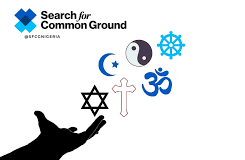
In today’s connected world, it’s important to understand different religions for both personal and work interactions.
Religion shapes what people believe and do, and it affects world politics, cultures, and how societies behave.
This article gives a detailed look at the main religions around the world, based on a new study by Pew Research.
1. Christians
Christianity remains the largest religion globally, comprising approximately 31% of the world population.
This religious group includes a wide range of beliefs and practices, from Roman Catholicism and Protestantism to Eastern Orthodoxy.
Christianity’s widespread adherence can be attributed to historical factors such as European colonization and missionary work across continents.
2. Muslims
Islam holds the position as the second largest religion in the world, followed by about a quarter of the global population, or 25%.
Islam has significant followings in the Middle East, North Africa, and parts of Asia, with increasing populations in Europe and North America.
Muslims are divided into two main sects, Sunni and Shia, which differ in various practices and interpretations of Islamic law.
3. Unaffiliated
The unaffiliated category includes atheists, agnostics, and people who do not identify with any particular religion.
Making up 15.6% of the global population, this group is particularly large in regions such as China, Japan, and Western Europe, where secularism is more prevalent.
4. Hindus
Hinduism accounts for 15.2% of the world population, with the vast majority of its adherents based in India and Nepal.
This ancient religion is characterized by a complex framework of gods and goddesses, rituals, and a strong emphasis on philosophy and spirituality.
5. Buddhists
Buddhism is practiced by 6.6% of the world population and is predominant in East and Southeast Asia.
The teachings of Buddha, focusing on personal spiritual development and the attainment of a deep insight into the true nature of life, attract followers globally.
6. Folk Religions
Encompassing 5.6% of the global population, folk religions include various traditional, indigenous, and tribal religious practices.
These are primarily observed in Asia, Africa, and the Americas, reflecting the rich cultural heritages and ancestral beliefs of the local populations.
7. Jews
Judaism, with followers making up just 0.2% of the world population, is one of the oldest monotheistic religions.
The Jewish community is concentrated mainly in Israel and the United States.
Despite its small size relative to other world religions, Judaism has played a significant role in the development of Western civilization and religious thought.
Conclusion
The diversity in world religions is vast and reflects the intricate tapestries of human society and culture.
Each religion, with its unique traditions and beliefs, contributes to the global community, influencing values, laws, and customs.
As the world becomes more connected, the interaction between different religious groups is likely to increase, promoting a deeper understanding and respect among them.
This overview, based on data from Pew Research, underscores the importance of recognizing and appreciating this religious diversity as a step towards global harmony and cooperation.